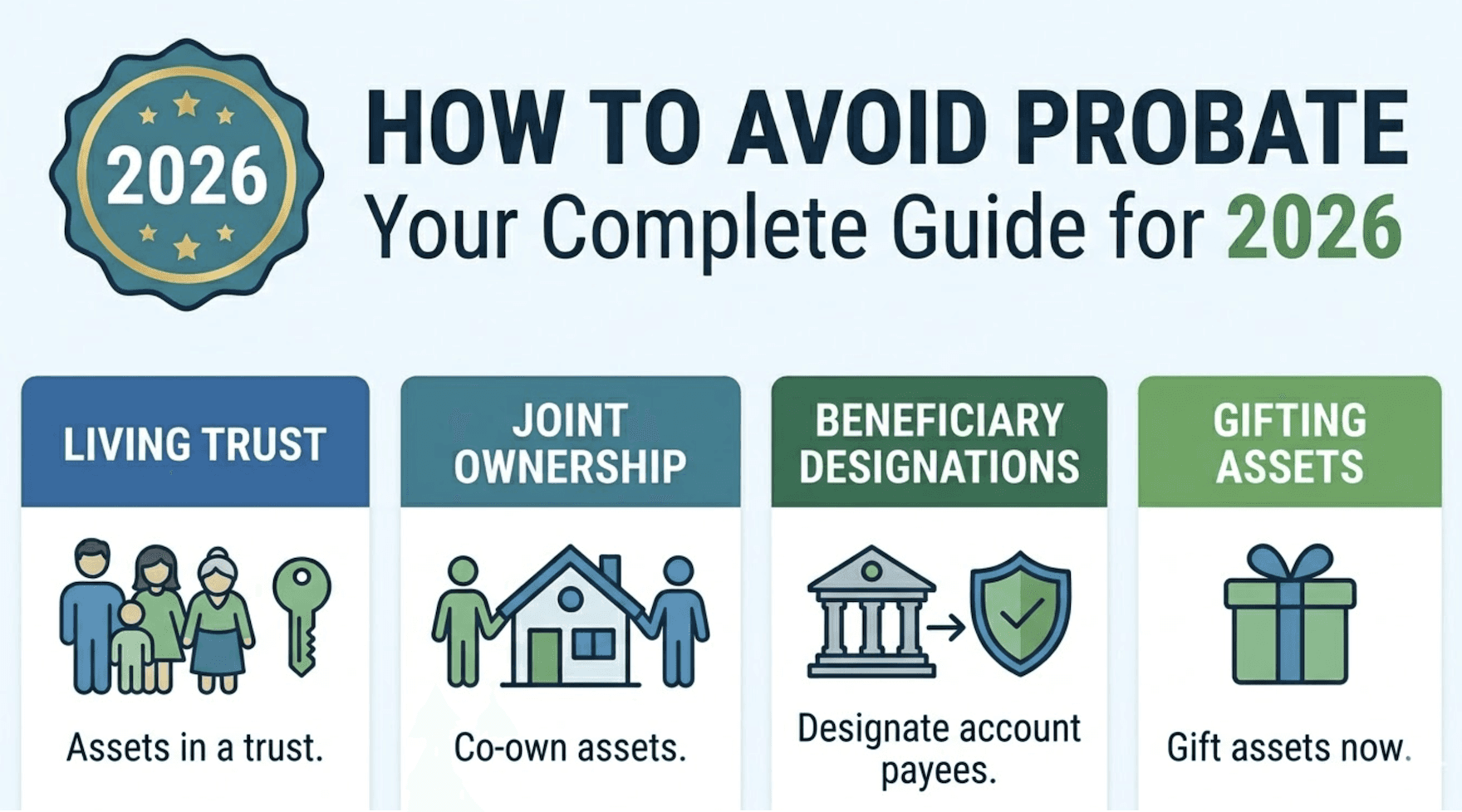
Guides
Estate Planning for Blended Families: A Complete Guide
Review the trusts, wills, and beneficiary strategies that protect your spouse, your children, and your step-children.
Share this article:


Blended families face a question that traditional families don't: how do you provide for your current spouse without leaving your children from a prior marriage with nothing? State intestacy laws won't help you here—they treat step-children as legal strangers, no matter how close you are.
This guide covers the trusts, beneficiary designations, and strategies that protect everyone in your blended family, from your spouse to your biological children to the stepchildren you've raised as your own.
What Is a Blended Family?
A blended family is a household where a couple lives with children from one or both of their previous relationships. Step-parents, step-children, half-siblings—all of these fall under the blended family umbrella. If your family tree has branches from more than one marriage, you're in a blended family. 16% of American children live in blended families, and if your family tree has branches from more than one marriage, you're in one too.
Why Estate Planning Is More Complex for Blended Families
Blended families face a tension that traditional families don't: your current spouse and your children from a prior marriage may have competing interests. You want to provide for your spouse, but you also want to make sure your kids aren't left out. Those two goals can pull in opposite directions.
State intestacy laws add another layer of complexity. Intestacy laws are the default rules that apply when someone dies without a will. In most states, step-children inherit nothing under these rules, even if you raised them from childhood. Without a written plan, the law treats them as legal strangers.
Then there's the issue of commingled assets. Over time, what started as "yours" and "mine" often becomes "ours." Without clear documentation, it becomes difficult to honor your original intentions about who gets what.
What Happens Without an Estate Plan in a Blended Family?
If you die without a will or trust, state law decides who inherits your assets or trust, state law decides who inherits your assets. With only 1/3 of Americans reporting they have a will, this is a widespread risk for blended families. In most states, your surviving spouse receives a large portion of your estate, sometimes all of it. Your biological children from a prior marriage might receive far less than you intended, or nothing at all.
Step-children are particularly vulnerable. Unless you've legally adopted them, they typically inherit nothing under intestacy laws. The state doesn't recognize the relationship, no matter how close you were.
Why a Will Alone Is Often Not Enough for Blended Families
A will is a starting point, but it has real limitations for blended families. Wills go through probate, which is a public court process. That means anyone can see the details, and family members with competing interests can contest the will in court.
Here's the bigger issue: a will doesn't control assets that pass through beneficiary designations. Retirement accounts, life insurance policies, and certain bank accounts go directly to whoever is named on the account, regardless of what your will says. If your ex-spouse is still listed as the beneficiary on your 401(k), they'll receive it, even if your will says otherwise.
For blended families, trusts offer more control and protection than a will alone can provide.
Types of Trusts That Protect Blended Families
Trusts let you specify exactly who gets what, when they get it, and under what conditions. Different types of trusts solve different problems.
Revocable Living Trust
A revocable living trust avoids probate entirely if you transfer assets into the trust during your lifetime. When you die, those assets pass directly to your beneficiaries without going through court. You maintain complete control while you're alive and can change the terms whenever you want.
QTIP Trust / Marital Trust
A Qualified Terminable Interest Property (QTIP) trust is favored for second marriages. It provides income or assets to your surviving spouse for their lifetime. After your spouse passes away, the remaining assets go to your children from a prior relationship.
This structure ensures your spouse is cared for without disinheriting your kids. Your spouse benefits during their lifetime, but they can't redirect the assets to someone else.
Other marital trusts also provide for a surviving spouse, but they typically give them more flexibility and control over the trust assets. The trade-off is less certainty that the remaining assets will ultimately reach your children.
Lifetime Trust for Children
A lifetime trust holds a child's inheritance and protects it from creditors, divorce, or poor financial decisions. You set the terms for when and how they receive distributions, whether that's at a certain age, after reaching a milestone, or in regular installments over time.
How to Divide Assets in a Blended Family
There's no single right answer for dividing assets. The best approach depends on your family's values, finances, and circumstances.
Separate Property vs Marital Property
Separate property refers to assets you owned before the marriage. Marital property includes assets you acquired together during the marriage. Many blended families choose to treat these two categories differently, leaving separate property to biological children and marital property to a spouse.
Equal vs Equitable Distribution
Equal distribution means every beneficiary receives the same dollar amount. Equitable distribution means dividing assets based on each person's circumstances. For example, a younger child who still lives at home might receive more support than an adult child with an established career.
Neither approach is inherently better. What matters is that your plan reflects your intentions.
Using Trusts to Control When Beneficiaries Inherit
Trusts let you specify ages or milestones for when a beneficiary can access their inheritance. You might allow distributions at age 25, or after graduating from college, or in installments over several years. This is particularly useful for minor children or young adults who may not be ready to manage a large sum all at once.
How to Protect the Family Home in Your Estate Plan
The family home is often the most valuable and emotionally significant asset in a blended family. A common concern is ensuring your surviving spouse has a place to live while also preserving the home as an inheritance for your children.
Life Estate
A life estate gives your surviving spouse the legal right to live in the home until they die or move out. After that, ownership automatically passes to your children. It's a simple tool, but it can be inflexible if circumstances change.
QTIP Trust for the Residence
Placing the home in a QTIP trust allows your surviving spouse to use the residence for their lifetime with more flexible terms. The trust can address maintenance costs, property taxes, and even the possibility of selling the home if your spouse wants to downsize. After your spouse's death, the remaining value passes to your children.
Transferring the Home to a Trust
To fund a trust with your home, you sign a new deed transferring the title from your name into the name of the trust. This step is called "funding the trust," and it's essential for the trust to work as intended.
How to Update Beneficiary Designations in a Blended Family
Beneficiary designations are one of the most overlooked parts of estate planning, and one of the most important. The person named on your retirement account or life insurance policy receives that asset directly, regardless of what your will or trust says.
Forgetting to update beneficiary designations after a divorce or remarriage is one of the most common and costly mistakes in estate planning.
Retirement Accounts and IRAs
Assets in 401(k)s, IRAs, and pensions pass directly to the named beneficiary, superseding your will or trust. Federal law gives your current spouse certain rights to these accounts, so review and update designations after any marriage or divorce.
Life Insurance Policies
Life insurance can create a separate inheritance for your spouse, leaving other assets free for your children. Or you can name your children as beneficiaries directly. Either way, make sure the beneficiary listed on the policy matches your current intentions.
Payable on Death and Transfer on Death Accounts
Payable on Death (POD) and Transfer on Death (TOD) designations let bank and brokerage accounts bypass probate and pass directly to a named beneficiary. These designations are easy to set up but also easy to forget.
How to Choose an Executor and Trustee for a Blended Family
The people you choose for these roles will have significant power over how your estate is handled. In blended families, the potential for conflict is high.
Choosing an Executor
The executor is responsible for carrying out the terms of your will and settling your estate. In a blended family, choosing one child over another, or a child over a step-parent, can create friction. Consider someone who can remain neutral and handle family dynamics diplomatically.
Choosing a Trustee
The trustee manages assets held in a trust for your beneficiaries. In a blended family, a trustee may have to balance the financial needs of a surviving spouse against the long-term inheritance of your children. A neutral third party can act without the emotional weight of family relationships.
When to Consider a Corporate Trustee
A corporate trustee is a professional entity, like a bank or trust company, that serves in this role for a fee. While the cost is a consideration, a corporate trustee removes family emotion from decision-making. For complex estates or high-conflict families, this option may be worth exploring.
Planning for Incapacity in a Blended Family
Estate planning isn't just about what happens after you die. It's also about who makes decisions for you if you become incapacitated and can't make them yourself.
Herbie offers state-specific Power of Attorney and healthcare directive forms. Get started today.
How to Talk to Your Family About Your Estate Plan
Open communication prevents future conflict. Surprises in estate planning often lead to suspicion, resentment, and even lawsuits. Transparency with your spouse and children goes a long way toward keeping the peace.
You don't need a formal script. Consider discussing your overall intentions, who you've chosen as executor and trustee, the general structure of how assets will be divided, and your plan for the family home.
How Often to Update Your Blended Family Estate Plan
Your estate plan isn't a one-time project. Life changes, and your plan can change with it. Review your documents after any major event. Herbie offers unlimited updates at no extra cost.
Create Your Blended Family Estate Plan with Herbie
Herbie makes estate planning for blended families accessible and affordable. The platform handles the unique complexities you face.
FAQs About Blended Family Estate Planning
What is the best type of will for a blended family?
A pour-over will combined with a revocable living trust typically gives blended families the most control over asset distribution while avoiding probate. The will "pours" any assets not already in the trust into the trust at death, where your detailed instructions take over.
How does a prenuptial agreement affect estate planning for blended families?
A prenuptial agreement can define which assets are separate property and waive certain spousal inheritance rights. This makes it easier to protect children from prior relationships, since both spouses have already agreed on how assets will be treated.
Do state laws affect how blended families approach estate planning?
Yes. State laws vary on spousal inheritance rights, community property rules, and trust requirements. Using state-specific documents ensures your plan complies with the laws where you live.
Can step-children inherit if they are not legally adopted?
Step-children do not automatically inherit under intestacy laws. If you want a step-child to receive anything from your estate, you have to explicitly name them in your will or trust.
Blended families face a question that traditional families don't: how do you provide for your current spouse without leaving your children from a prior marriage with nothing? State intestacy laws won't help you here—they treat step-children as legal strangers, no matter how close you are.
This guide covers the trusts, beneficiary designations, and strategies that protect everyone in your blended family, from your spouse to your biological children to the stepchildren you've raised as your own.
What Is a Blended Family?
A blended family is a household where a couple lives with children from one or both of their previous relationships. Step-parents, step-children, half-siblings—all of these fall under the blended family umbrella. If your family tree has branches from more than one marriage, you're in a blended family. 16% of American children live in blended families, and if your family tree has branches from more than one marriage, you're in one too.
Why Estate Planning Is More Complex for Blended Families
Blended families face a tension that traditional families don't: your current spouse and your children from a prior marriage may have competing interests. You want to provide for your spouse, but you also want to make sure your kids aren't left out. Those two goals can pull in opposite directions.
State intestacy laws add another layer of complexity. Intestacy laws are the default rules that apply when someone dies without a will. In most states, step-children inherit nothing under these rules, even if you raised them from childhood. Without a written plan, the law treats them as legal strangers.
Then there's the issue of commingled assets. Over time, what started as "yours" and "mine" often becomes "ours." Without clear documentation, it becomes difficult to honor your original intentions about who gets what.
What Happens Without an Estate Plan in a Blended Family?
If you die without a will or trust, state law decides who inherits your assets or trust, state law decides who inherits your assets. With only 1/3 of Americans reporting they have a will, this is a widespread risk for blended families. In most states, your surviving spouse receives a large portion of your estate, sometimes all of it. Your biological children from a prior marriage might receive far less than you intended, or nothing at all.
Step-children are particularly vulnerable. Unless you've legally adopted them, they typically inherit nothing under intestacy laws. The state doesn't recognize the relationship, no matter how close you were.
Why a Will Alone Is Often Not Enough for Blended Families
A will is a starting point, but it has real limitations for blended families. Wills go through probate, which is a public court process. That means anyone can see the details, and family members with competing interests can contest the will in court.
Here's the bigger issue: a will doesn't control assets that pass through beneficiary designations. Retirement accounts, life insurance policies, and certain bank accounts go directly to whoever is named on the account, regardless of what your will says. If your ex-spouse is still listed as the beneficiary on your 401(k), they'll receive it, even if your will says otherwise.
For blended families, trusts offer more control and protection than a will alone can provide.
Types of Trusts That Protect Blended Families
Trusts let you specify exactly who gets what, when they get it, and under what conditions. Different types of trusts solve different problems.
Revocable Living Trust
A revocable living trust avoids probate entirely if you transfer assets into the trust during your lifetime. When you die, those assets pass directly to your beneficiaries without going through court. You maintain complete control while you're alive and can change the terms whenever you want.
QTIP Trust / Marital Trust
A Qualified Terminable Interest Property (QTIP) trust is favored for second marriages. It provides income or assets to your surviving spouse for their lifetime. After your spouse passes away, the remaining assets go to your children from a prior relationship.
This structure ensures your spouse is cared for without disinheriting your kids. Your spouse benefits during their lifetime, but they can't redirect the assets to someone else.
Other marital trusts also provide for a surviving spouse, but they typically give them more flexibility and control over the trust assets. The trade-off is less certainty that the remaining assets will ultimately reach your children.
Lifetime Trust for Children
A lifetime trust holds a child's inheritance and protects it from creditors, divorce, or poor financial decisions. You set the terms for when and how they receive distributions, whether that's at a certain age, after reaching a milestone, or in regular installments over time.
How to Divide Assets in a Blended Family
There's no single right answer for dividing assets. The best approach depends on your family's values, finances, and circumstances.
Separate Property vs Marital Property
Separate property refers to assets you owned before the marriage. Marital property includes assets you acquired together during the marriage. Many blended families choose to treat these two categories differently, leaving separate property to biological children and marital property to a spouse.
Equal vs Equitable Distribution
Equal distribution means every beneficiary receives the same dollar amount. Equitable distribution means dividing assets based on each person's circumstances. For example, a younger child who still lives at home might receive more support than an adult child with an established career.
Neither approach is inherently better. What matters is that your plan reflects your intentions.
Using Trusts to Control When Beneficiaries Inherit
Trusts let you specify ages or milestones for when a beneficiary can access their inheritance. You might allow distributions at age 25, or after graduating from college, or in installments over several years. This is particularly useful for minor children or young adults who may not be ready to manage a large sum all at once.
How to Protect the Family Home in Your Estate Plan
The family home is often the most valuable and emotionally significant asset in a blended family. A common concern is ensuring your surviving spouse has a place to live while also preserving the home as an inheritance for your children.
Life Estate
A life estate gives your surviving spouse the legal right to live in the home until they die or move out. After that, ownership automatically passes to your children. It's a simple tool, but it can be inflexible if circumstances change.
QTIP Trust for the Residence
Placing the home in a QTIP trust allows your surviving spouse to use the residence for their lifetime with more flexible terms. The trust can address maintenance costs, property taxes, and even the possibility of selling the home if your spouse wants to downsize. After your spouse's death, the remaining value passes to your children.
Transferring the Home to a Trust
To fund a trust with your home, you sign a new deed transferring the title from your name into the name of the trust. This step is called "funding the trust," and it's essential for the trust to work as intended.
How to Update Beneficiary Designations in a Blended Family
Beneficiary designations are one of the most overlooked parts of estate planning, and one of the most important. The person named on your retirement account or life insurance policy receives that asset directly, regardless of what your will or trust says.
Forgetting to update beneficiary designations after a divorce or remarriage is one of the most common and costly mistakes in estate planning.
Retirement Accounts and IRAs
Assets in 401(k)s, IRAs, and pensions pass directly to the named beneficiary, superseding your will or trust. Federal law gives your current spouse certain rights to these accounts, so review and update designations after any marriage or divorce.
Life Insurance Policies
Life insurance can create a separate inheritance for your spouse, leaving other assets free for your children. Or you can name your children as beneficiaries directly. Either way, make sure the beneficiary listed on the policy matches your current intentions.
Payable on Death and Transfer on Death Accounts
Payable on Death (POD) and Transfer on Death (TOD) designations let bank and brokerage accounts bypass probate and pass directly to a named beneficiary. These designations are easy to set up but also easy to forget.
How to Choose an Executor and Trustee for a Blended Family
The people you choose for these roles will have significant power over how your estate is handled. In blended families, the potential for conflict is high.
Choosing an Executor
The executor is responsible for carrying out the terms of your will and settling your estate. In a blended family, choosing one child over another, or a child over a step-parent, can create friction. Consider someone who can remain neutral and handle family dynamics diplomatically.
Choosing a Trustee
The trustee manages assets held in a trust for your beneficiaries. In a blended family, a trustee may have to balance the financial needs of a surviving spouse against the long-term inheritance of your children. A neutral third party can act without the emotional weight of family relationships.
When to Consider a Corporate Trustee
A corporate trustee is a professional entity, like a bank or trust company, that serves in this role for a fee. While the cost is a consideration, a corporate trustee removes family emotion from decision-making. For complex estates or high-conflict families, this option may be worth exploring.
Planning for Incapacity in a Blended Family
Estate planning isn't just about what happens after you die. It's also about who makes decisions for you if you become incapacitated and can't make them yourself.
Herbie offers state-specific Power of Attorney and healthcare directive forms. Get started today.
How to Talk to Your Family About Your Estate Plan
Open communication prevents future conflict. Surprises in estate planning often lead to suspicion, resentment, and even lawsuits. Transparency with your spouse and children goes a long way toward keeping the peace.
You don't need a formal script. Consider discussing your overall intentions, who you've chosen as executor and trustee, the general structure of how assets will be divided, and your plan for the family home.
How Often to Update Your Blended Family Estate Plan
Your estate plan isn't a one-time project. Life changes, and your plan can change with it. Review your documents after any major event. Herbie offers unlimited updates at no extra cost.
Create Your Blended Family Estate Plan with Herbie
Herbie makes estate planning for blended families accessible and affordable. The platform handles the unique complexities you face.
FAQs About Blended Family Estate Planning
What is the best type of will for a blended family?
A pour-over will combined with a revocable living trust typically gives blended families the most control over asset distribution while avoiding probate. The will "pours" any assets not already in the trust into the trust at death, where your detailed instructions take over.
How does a prenuptial agreement affect estate planning for blended families?
A prenuptial agreement can define which assets are separate property and waive certain spousal inheritance rights. This makes it easier to protect children from prior relationships, since both spouses have already agreed on how assets will be treated.
Do state laws affect how blended families approach estate planning?
Yes. State laws vary on spousal inheritance rights, community property rules, and trust requirements. Using state-specific documents ensures your plan complies with the laws where you live.
Can step-children inherit if they are not legally adopted?
Step-children do not automatically inherit under intestacy laws. If you want a step-child to receive anything from your estate, you have to explicitly name them in your will or trust.
Share this article:
You might also like these related posts